

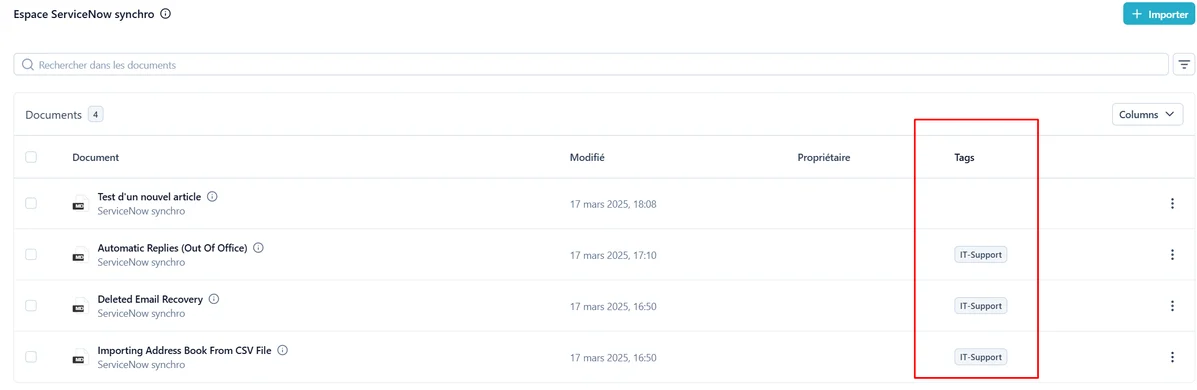
Tags are defined by an admin, applied automatically overnight, but can be generated instantly if needed. They make your documents easier to find and will support advanced features going forward.
How Tags Are Created
- Company Admins define a list of tags through the admin interface in the
/admin/knowledge_graph/tag/url. - Each tag can include a description to clarify its purpose.
- During off-peak hours (typically at night), an automated process applies these tags to documents based on their name and description.
Generating Tags Immediately
You don’t have to wait overnight for tags to be applied. If needed, you can trigger tag generation manually:- Go to the Document Administration Page:
/admin/embeddings/document/url. - Select one or more documents.
- From the action drop-down menu, choose “Tag document with knowledge graph.” ✅
Where to Find Tags
- Tags are displayed directly in the Document List page.
- They appear alongside each document, making it easy to identify content.
- You can also use them as filters to narrow down your search results.
Why Tags Matter
- Tags improve the accuracy and speed of document search.
- In the future, they will also power additional features across the platform (organization, automation, recommendations, etc.).